With multiple sugar alcohols available—each offering different levels of sweetness, functionality, and performance—selecting the right one is not always straightforward. This decision becomes particularly important in sugar reduction, where removing sugar affects not only sweetness, but also structure, texture, and stability. Understanding how sugar alcohols function is therefore essential for developing successful reduced-sugar products.
What Are Sugar Alcohols?
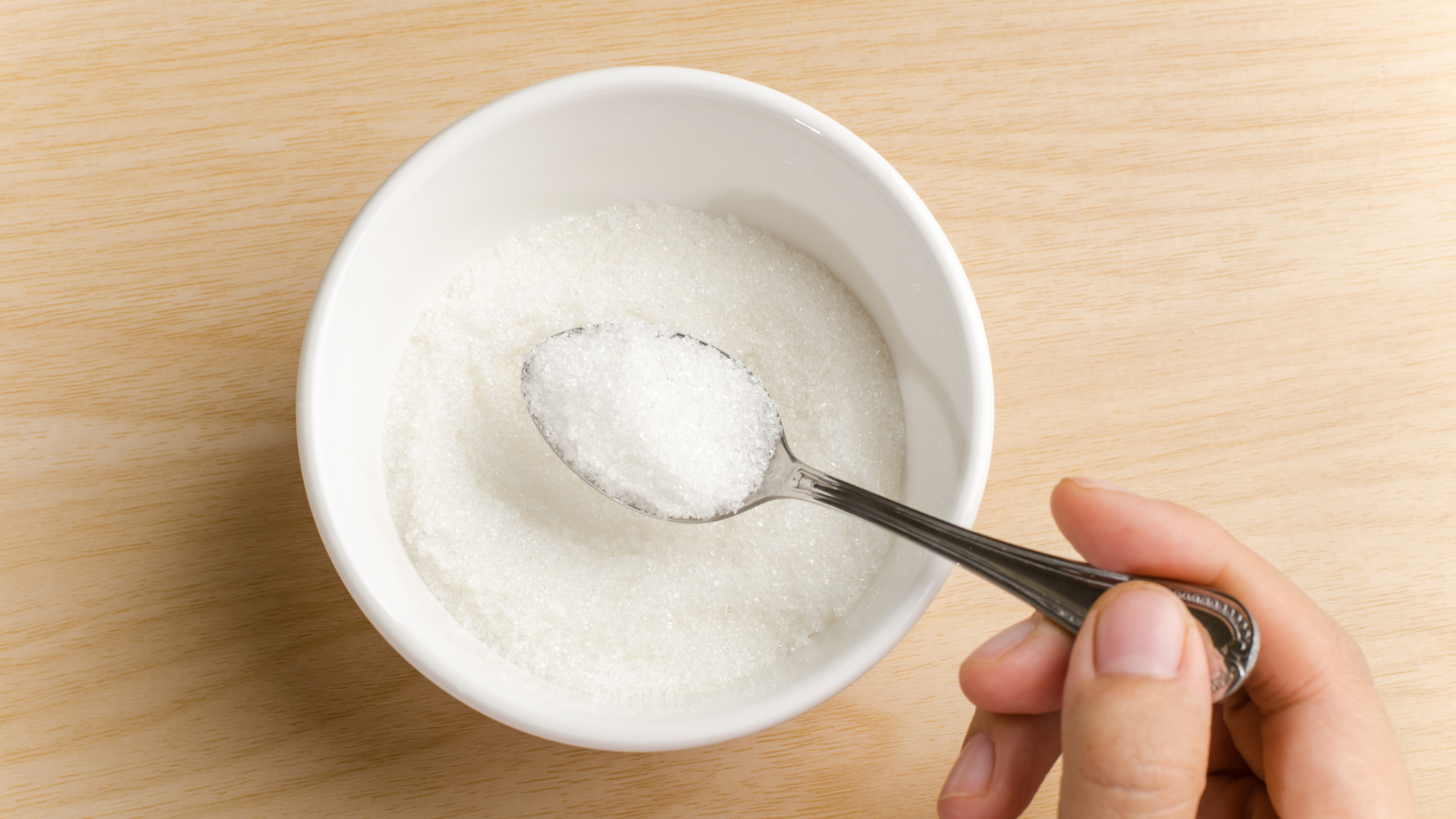
Sugar alcohols, also known as polyols, are low-calorie sweeteners commonly used as sugar substitutes in food and beverage applications. Despite their name, they do not contain ethanol and are safe for consumption.
Key Benefits of Polyols:
- Lower calories compared to sugar
- Reduced impact on blood glucose levels
- Provide bulk and texture
- Tooth-friendly (non-cariogenic)
Types of Sugar Alcohols
1. Sorbitol
Sorbitol is a widely used polyol known for its mild sweetness and excellent moisture retention properties.
- Sweetness: ~60% of sucrose
- Key function: Humectant (helps retain moisture)
- Performance: Improves softness and extends shelf life
2. Erythritol
Erythritol is a zero-glycaemic, nearly zero-calorie polyol known for its high digestive tolerance and clean taste profile.
- Sweetness: ~70% of sucrose
- Key function: Low-calorie bulking agent
- Performance: Provides a clean taste with cooling effect
3. Maltitol
Maltitol is one of the closest functional substitutes for sucrose, providing significant bulk and a similar mouthfeel without the full caloric impact.
- Sweetness: ~90% of sucrose
- Key function: Bulk and sugar-like texture
- Performance: Provides similar taste and mouthfeel to sugar
4. Xylitol
Xylitol delivers sweetness equivalent to sugar along with additional oral health benefits.
- Sweetness: ~100% of sucrose
- Key function: Taste enhancement and dental health
- Performance: Produces a refreshing cooling sensation and helps inhibit the growth of cavity-causing bacteria.
Technical Comparison at a Glance
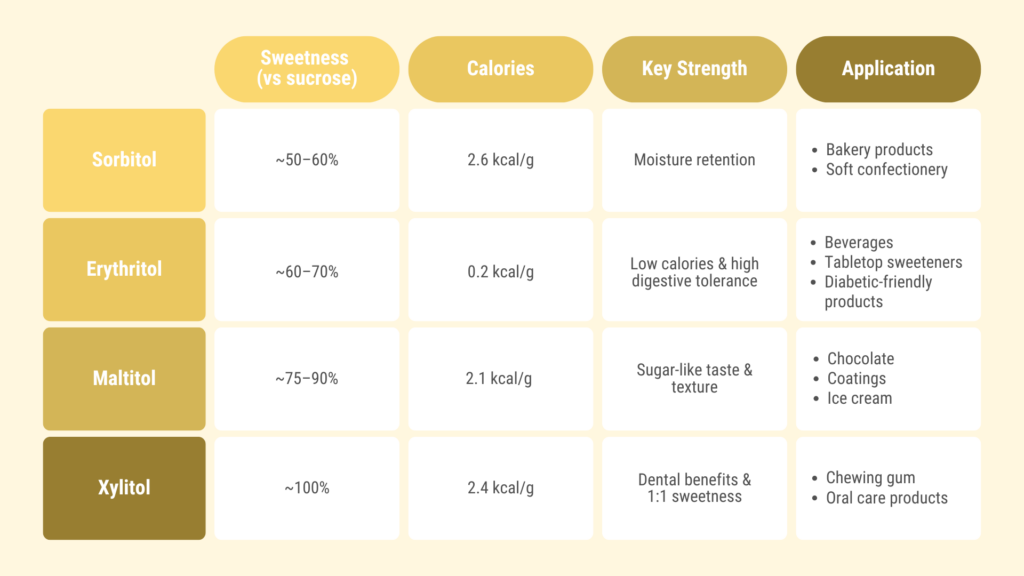
Selecting the Right Sugar Alcohol for Your Application
For moisture and softness
In products where softness and moisture retention are key, such as cakes, fillings, or soft confectionery, selecting a polyol with strong humectant properties becomes critical to prevent drying and hardening.
- Sorbitol is often used in bakery and soft confectionery for this purpose.
For calorie reduction
For products targeting lower calorie content, such as reduced-calorie beverages, tabletop sweeteners, or keto-friendly products, a polyol with minimal caloric contribution is preferred.
- Erythritol is widely used in these applications because it provides sweetness with almost zero calories and minimal impact on blood sugar levels.
For texture and mouthfeel
In formulations where bulk and mouthfeel are critical, such as chocolate and chocolate-coated products, it is important to choose a polyol that behaves similarly to sugar.
- In such applications, maltitol is commonly used due to its sugar-like texture and sweetness profile.
For functional positioning
In products designed for oral care or dental-friendly positioning, such as sugar-free gum or lozenges, ingredients are selected not only for sweetness but also for their additional functional benefits.
- Xylitol is particularly valued in these applications due to its ability to help reduce the growth of cavity-causing bacteria.
Choosing the right sugar alcohol depends on your product goals, whether it is improving texture, reducing calories, enhancing stability, or supporting functional claims. A clear understanding of each polyol’s properties allows for better formulation decisions and more successful product development.
Looking for the right sugar alcohol for your application? Get in touch with us to explore the most suitable solution for your formulation needs.